Wednesday, April 6, 2011

The Great Caterpillar Massacre and Rescue

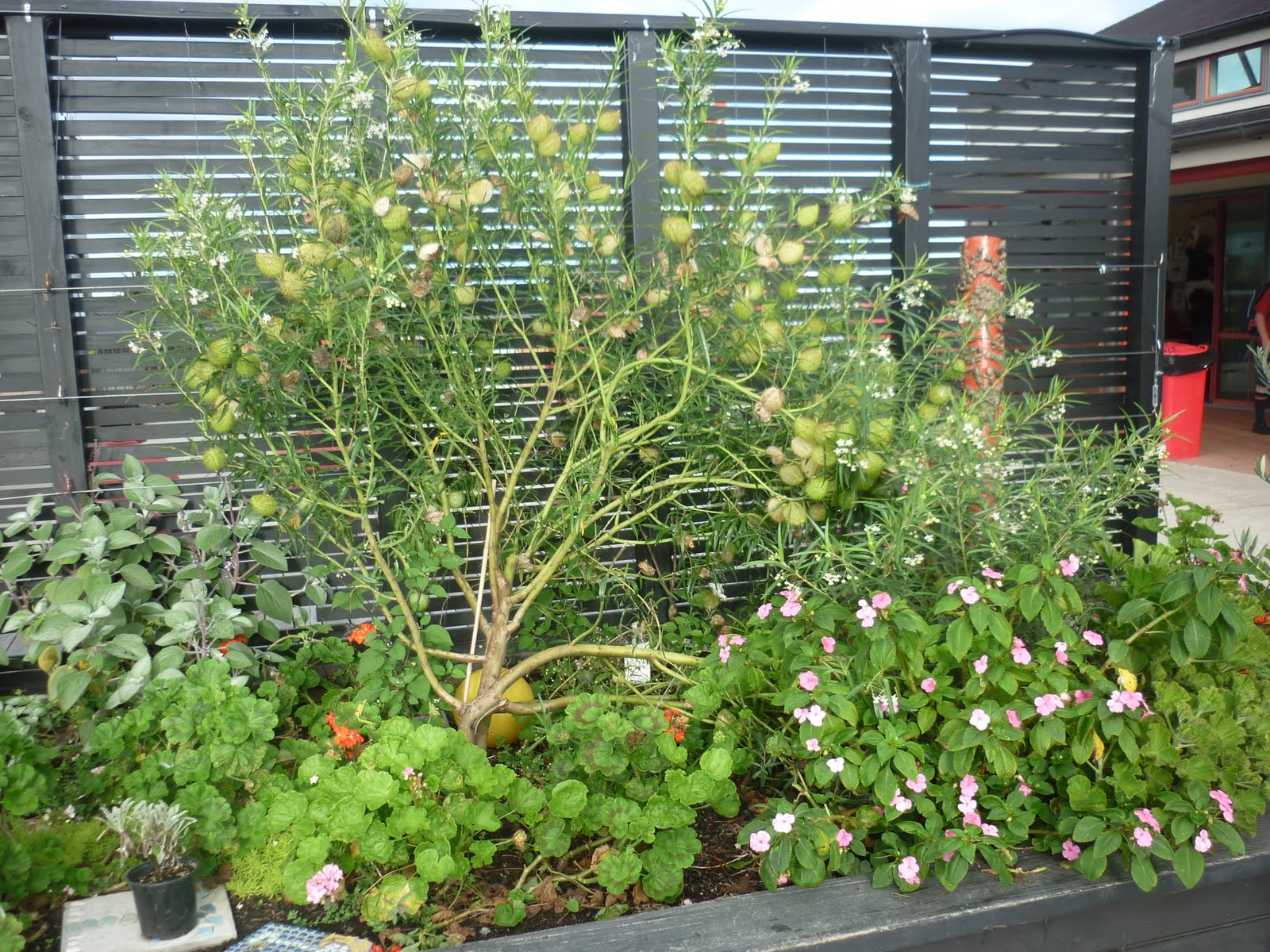
A great loss occurred in our class's garden during the late hours of this morning. Part of our swan plant, home to our much-loved caterpillars, chrysalids and ladybirds (but not aphids) had split and torn away but the plant was still alive and growing. We had been following the progress of several caterpillars who had recently turned into chrysalids. (See previous blogs)

Huia 1 had just settled down to our 100 Need to Know Spelling Words end-of-term test when we noticed our caretaker cutting down our swan plant. Mrs Vincent was the first one to be shocked and she shrieked, "Aaaaaaaaaaaah...... the caterpillars!"

She dashed out of the room but it was too late. The caretaker had already cut the plant down and was piling up the branches on the court beside the garden. Mrs Vincent explained that our class was studying the life cycles of monarch butterflies and swan plants.

At that point, Mrs Vincent decided to postpone the spelling test and we launched a search and rescue operation instead. We brought all the branches inside and looked for survivors.

We found two baby caterpillars, many large caterpillars, a couple of chrysalids and many lady birds which we relocated on a swan plant near the junior classes.


We noticed that the tips of the branches on this swan plant were covered in aphids so we knew that they could affect the health of the new host swan plant. Because we knew that ladybirds eat aphids, we relocated as many ladybirds as we could find.


With the chrysalids, we cut the branches on which they were hanging and pegged them to a washing line in our class. We are going to keep them safe until they hatch into monarch butterflies. Some people will take them home to care for them over the weekend.


Terence and Nikhil found a caterpillar which was not a monarch butterfly caterpillar and went to the library to identify it. It looked like it was a cabbage butterfly caterpillar which meant we should have killed it, but it looked as if it was dying by itself.

Hoani found a praying mantis and Danny found a shiny blue lady bird. Tegan found a whitish lady bird with black spots where its eyes could have been but she doesn't think they were eyes. We also found a few small black and yellow/orange insects which we have yet to identify. In the classroom we have some eggs and a baby caterpillar on a swan plant branch in a glass of water and outside, we have bigger swan plant branches sitting in buckets of water.


Some caterpillars had been crushed underfoot as they fell off the plants and Callum saw another dead one being eaten by ants, so he buried them and put flowers on their grave and made a tombstone out of one of the succulent plant leaves. "That's respect," said Nikhil.


By lunchtime, we had just about finished the rescue. Meanwhile, in the classroom, some people were reading, catching up work in their Anthology books, and Michael, Tegan, Hunter, Fili, Shayla and Danny were picking up hundreds of tiny swan plant seeds which had dropped on our floor.

After all that, the spelling test was abandoned for the day and we wrote this recount about the events of the day instead. This had turned into an excellent learning experience because it showed how much knowledge we had learned since we discovered the first caterpillar on our swan plant a few weeks ago. We were proud of what we had done in such an unexpected event.

Mrs Vincent said, "Spelling test tomorrow..."

Thursday, March 31, 2011

Hanging Around on our Swan Plant

There's lots of activity on our swan plant. The largest inhabitants are the caterpillars of the monarch butterfly. But there's also a few other inhabitants - and they don't all get on well together either. Read on... Click on pictures to enlarge them.

So, briefly, this is what is happening:

1. The monarch butterfly lays eggs.
DANGER! DANGER! Wasps eat the eggs, ants carry the eggs away.

A caterpillar egg, on the underside of a leaf. Why do you think butterflies lay their eggs here?Un huevo

2. The eggs hatch into larvae (tiny caterpillars).
DANGER! DANGER! Wasps eat the larvae
(Check out this photo)
3. Larvae grow into caterpillars who eat and eat and eat milkweed (swan plants)
DANGER! DANGER! Praying mantises and shield bugs eat caterpillars.

Caterpillars hanging out together.
Las orugas
How can you tell one end of a caterpillar from the other?Una oruga.
4. Caterpillar turns into chrysalis (pupa)


Una crisálida
5. Fully grown adult butterfly emerges. A newly emerged adult butterfly. The chrysalis was on an orange tree. What can you tell about the colour of a newly-emerged butterfly? Una mariposa.

One of the reasons why it took so long for our caterpillars to show up could be because of the pests

We have definitely had wasps around our garden but we haven't actually seen them eating caterpillars yet. Something to look out for...

We also have a never-ending supply of ants at school, and on the swan plant, so this could also be a reason for the slow arrival of caterpillars this year.

However, one of the most interesting interesting problems facing the caterpillars are aphids - and they don't even eat the caterpillars!
Aphids (and two dying? caterpillars and a ladybird if you look closely)
los áfidos
Aphids feed on the sap of the plant and pass on viruses which affect the health of the plant - and therefore the food supply for the caterpillars.

But then, (and this is the really interesting part), the ants defend these aphids and 'farm' them by collecting a honey dew they secrete.

But the good news is that lady birds attack and eat aphids. One lady bird can eat about 600 aphids in its lifetime! So, look after the lady bugs - they are helping keep plants safe from aphids.


Check this site for more information about the monarch butterfly in New Zealand.


Swan plant seed pod bursting.
Today, in Spanish classes, we decided to change what we usually do and learned about the life cycle of the butterfly, in Spanish, instead. We went outside to our class garden and counted chrysalids and caterpillars - in Spanish.

¿Dónde están las orugas?
Aquí están las orugas.


el huevo = the egg
los huevos = the eggs
la oruga = the caterpillar
las orugas = the caterpillars
la crysálida = the chrysalis
las crysálidas = the chrysalids
la mariposa = the butterfly
las mariposas = the butterflies
la hormiga = the ant
las hormigas = the ants
el áfido = the aphid
los áfidos = the aphids

One caterpillar decides to make its chrysalis under a geranium leaf. I wonder why.


Sunday, March 27, 2011

What is happening in our garden?


This is a self-sown swan plant. Some of the lower branches got too long and heavy to be supported by the trunk, which split but didn't break away completely.

Because it was still alive and growing, we left it so we could have plenty of leaves for the expected caterpillars.

It took a while, but eventually caterpillars were noticed. We didn't see any eggs but they must have been there.

This is the seed pod which looks a bit like a swan's body - until it bursts and drops its seeds.
It's taken a while, but we finally have some activity on the swan plant in our class garden.
Check out this site to find out all you wanted to know - and more- about the monarch butterfly in New Zealand.


There are quite a few lady bugs around too.
What are these little guys going to grow into?

Here's a quiz about monarch butterflies in North America. (It has questions and answers - see how you go.)

Here's a simple chart of the life cycle of a monarch butterfly.

And here it is in Spanish.

Sunday, March 13, 2011

Putting the Fun into Fund-Raising for Christchurch


Christchurch written in cans.

On Thursday our school held a " Water Day" to help raise funds for the Red Cross's Christchurch Earthquake appeal. Everyone paid $1.00 and contributed one tin of food as an entrance fee. For this activity our school raised $450 and donated 537 tins of food. Last week our mufti day raised close to $1,800 dollars for the Red Cross.

For a water day, there are hoses and big troughs of water on the field and the students fill up water pistols or squirty bottles and throw water at each other.

This time, we had a zoom slide. Mrs Whitehead brought a big piece of black polythene and everyone ran up to it then slid along it. We used a garden sprinkler hose and lots of detergent to keep it slippery.

Year 8 Sewing Class Progress:

Ben, Callum and Chris have finished sewing their boxer shorts. Everyone else is nearly finished.


Tuesday, March 1, 2011

Two Minutes of Silence for Christchurch


At 12:51 today, exactly a week from the 6.3 Christchurch earthquake, our students observed two minutes of silence to pay tribute to the victims of the disaster.

After students ate their lunch there was a bell to gather in class lines on the field. Our entire school, along with the rest of New Zealand, remained still and silent for two minutes. Then a bell rang and everyone continued with what they were doing prior to 12:51.

Click here to find out more about the earthquake.

You can find regular updated information here.

Here are some photos of how the two minutes silence were observed around New Zealand