Showing posts with label camp. Show all posts

Monday, June 4, 2012

Muchas Gracias from the Year 8 Awhitu Camp


We would like to thank all the following people and businesses for their help and contributions towards our fabulous,  environmental, Spanish, educational, inspiring, enjoyable, breath-taking, early-waking, mouth-watering, zoom-sliding,  friendly, scenic, country, muddy, hard-working, healthy, helpful, successful camp:


Camp helpers: Mrs Garthwaite, Mrs Tofilau, Mr Rouse and Mr Cheng for making it possible for the camp to go ahead. We couldn't have done our camp without your help - especially  helping with transport to and from the Awhitu Fire Force and Hamiltons' farm, helping with orienteering, serving food, cooking on the barbecue, teaching us how to clean a toilet and going on long walks with us, and teaching  us CPR.


Mrs Lee and Julian for the mouth-watering, delectable and  irresistible cooking. You should be on Master Chef.


Harker's Passenger Services - especially bus drivers  Adrian and Conway for their safe driving, helping pack and stack the bus,  and helpful information about the Awhitu Peninsula


Waiuku Museum helpers - for teaching us about the olden days, including schools, entertainment, jails, dairy tools, local history, dental clinics and transport.
 
  
"I learnt a lot about the past. My favourite part of that was the school. You guys made me feel sorry  for the people at school in the 1920s. I never knew about milk bottles and dairy uses. The jail was very dark and  it was not very easy to get used to." Trent O
 "I learned how not to talk or laugh in the old school. I also learned that they used newspaper for toilet paper." Jackie


Mr Dillon at New Zealand Hothouse for the kind donation of cucumbers and tomatoes. They were crunchy and crisp juicy. We will look out for your vegetables when we are at the supermarket.


Bhanas' Food Market at Matakawau - for the  appetising, luscious, scrumptious  fresh fruit and vegetables. Our favourites were the huge, sweet, crunchy apples and the juicy oranges.


Mr and Mrs Hamilton and family for teaching us about dairy farming and how early you have to wake up to milk the cows - and that you don't get paid for a while.


Paul Dixon from the Manukau Heads Lighthouse for telling us all about the Orpheus shipwreck and the restoration of the lighthouse. Also, for  choosing us  for the premiere performance of his play about the  Orpheus shipwreck. We enjoyed re-enacting the sinking of it and learned a lot more by being part of the play. 


"When we did the re-enactment of the HMS Orpheus' last hours, it  gave us an insight into what took place nearly 150 years ago. " Rudadiso
 
Mr Patterson from Orua Bay  and Anna  Mc Naughton for providing us with the opportunity to plant trees to help regenerate  natural vegetation at the beach. We learned how to use a spade and how to work a little bit harder than we thought we could.

The Awhitu Fire Force to teaching us how to read and use a fire extinguisher, and how to roll up a fire hose, and how to hold and squirt a fire hose. We also learned how to line up for a roll call. 
  
"We were all fascinated by the equipment you use, from the water pumps to the very long ladders ... We got a really good work out and understood what it takes  to be a real life hero." Rudadiso 
Mr and Mrs Shuker for the use of orienteering equipment. Without the equipment, (and Mrs Whitehead's expertise) we would not have had so much fun running around the park.


To Wai care Kate and Paul the fish man for joining us for the walk and teaching us about eels and other interesting things that live - or die - in the water at the park.


To The Gardens School GST (PTA) for your support in helping fund some of our camp. It was much appreciated and we will all buy an extra sausage at the next sausage sizzle to help support future camps.


Friday, May 18, 2012

La Comida del Campamiento


Tegan: Me gustan comer las hamburgesas con carne, zanahorias, pepino, queso y salsa. Me gusta más el chocolate caliente cada noche. 


Lauren: Me gustan comer los nachos con carne molida y queso. Me gustan más las salchichas en pan con salsa. 


Caitlin: Me gustan comer las tapas, especialmente las albondigas en salsa tomate.

Tapas
Sangria
Empanadas


Sunday, May 13, 2012

More Camp Photos


I'm looking forward to seeing students' photos - especially of the cowshed and milking cows, orienteering and the visit to Crab Island - because I have none of those.  Year 8s might like to upload your  best photos onto your kidblogs so your own class can also see them 
Learning to use a fire extinguisher.

Practising using a fire extinguisher. Note the cattle  in the background - authentic evidence that this is a rural fire force.


Running out a fire hose


Using the fire hose.
Rolling up a fire hose. 
Volunteer fire fighters

Spanish night - 12 different tapas to choose from. Muchas gracias  señora Lee.  
-->
Sangria - non-alcohol version.
Sunrise on the last day at camp - looking towards Manurewa.
Matakawau Point when the tide is in. This is in the paddock beside our camp.


Relaxing before heading back to camp to catch the bus. Note the danger sign. (We were on the safe side of the danger, by the way ... )


Beach-combing treasure,
Investigating trial and error.


Fun in the sand.

Saturday, May 12, 2012

Camp Photos - Part 1

Here's a random sample of photos from camp. There are lots and lots more photos to come. This is to show you some of the activities we did during our week at the Awhitu Environmental Camp.

Day 1 at the beach investigating.

Danny meets stock. Stock meets Danny.


What is the circumference of one of the oldest and largest macrocarpas in New Zealand?


Autumn fun. Testing the direction of the wind.

What to do on a very rainy afternoon and evening with no battery operated technology - or computers.

What to do on a rainy evening ....

Paul tells us about the Orpheus shipwreck and lighthouses.

What's inside a lighthouse?

This is how high we climbed. Can you see the bus? This is what it looks like when you have your head in the clouds.

Miss Murphy calls a spade a spade!

To get to the tree-planting area, some people had to leap over a ditch.
Mrs Whitehead's infamous zoom slide - or what happens when you leave the zoom slide.

The zoom slide becomes a mud slide.

How much fun can you have with a piece of black polythene, a fire hose and detergent?
Don't expect to stay clean ...

It helps if you see where you are going ...
Happy birthday Jackie and Jessica.


Tree planting at Orua Bay. Can you see the sea in the background?

Thursday, May 10, 2012

Year 8s at camp

This is the view from our camp ...

Just a quick note to let you all know that camp is going extremely well - even when it is raining for hours on end! 


Thursday, May 27, 2010

This Week's Update - Written work from Camp


This week we have been getting back into our routine and catching up on some work.

It has been two weeks since we have been back from camp. Camp was awesome. We all enjoyed it and loved our great experience and are catching up on some work - like recounts, "Inside Me" poems, explanation writing and getting back into our SSR (Sustained Silent Reading).

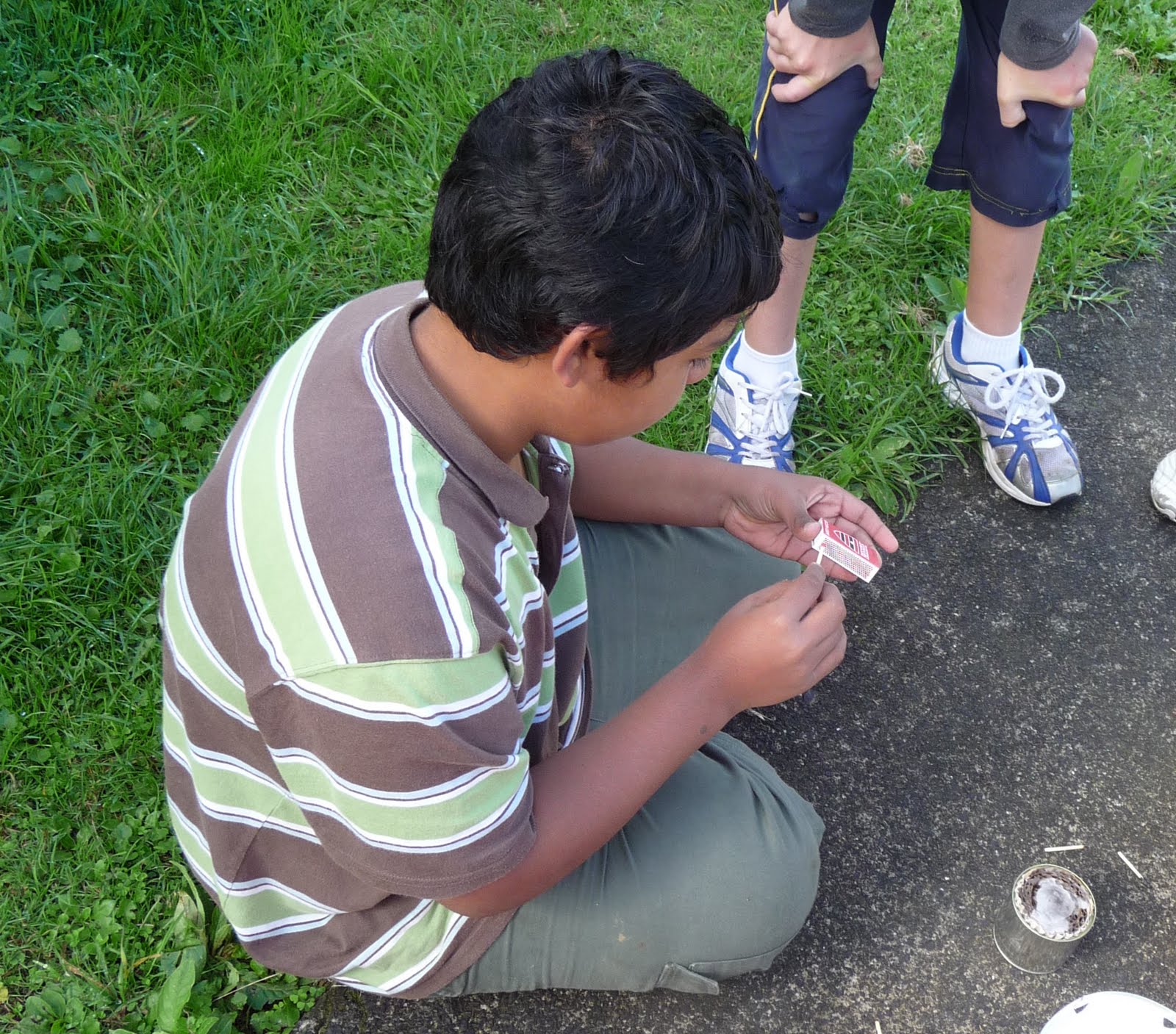
Here is some of the students' explanation writing on hobo stoves:

Explanation Writing - Hobo Stoves


A hobo stove is a fun and easy way to cook and prepare simple meals.

A hobo stove is a tin stove which is roughly a 17-18 cm long stove and the little tin is 8 cm long. The little tin has some wax and spiral shaped cardboard so you can light it. The little tin is actually a condensed milk or baked bean tin, and they work perfectly! The bigger tin is for cooking similar to a fry pan. You can cook almost anything on it - for instance sausages, pikelets or pancakes etc.

When you want to cook or start cooking on a hobo stove, you first light up the small tin. Once it has been lit, you cover the bigger tin over the smaller tin which makes it all hot when you leave it for approximately 2-3 minutes.
Once it is heated, you can add a little bit of olive oil and once you have poured the oil you can start cooking - which is a lot of fun!

When you have finished cooking, you can carefully remove the bigger tin and blow out the smaller tin. Leave it for a while to cool and once it has cooled down you can wash it.


Nikeeta

25 May 2010


2.
A hobo stove is used for outside cooking. It is great for camps.


A hobo stove has two units. There is the outside unit and it has to be 17.5 cm or bigger. It has holes around the top and bottom. The top hole lets smoke and carbon dioxide out and the bottom lets air come in. The second unit is a small can about as big as 8.5cm. This can is used for the flame. It has card board and wax in it.

You first light a match and place it on the card board and wait for a flame then put the big can on top.

When you have finished put the big can over the small one and the flame will be gone.


But I think no one under about 10 or 11 should use the hobo stove without a parent or guardian with them. But over all, hobo stoves are fun to use. Nikhil 25 May 2010

3.
A hobo stove is something that you use to cook on. Hobo stoves are made from a large steel tin and a small steel tin filled with corrugated cardboard covered in wax.

When you light a hobo stove with a match, it is the small tin with corrugated cardboard and wax in it that you light. Then you put the large tin on top to let oxygen get in and out of it.

When you start to cook anything you need to oil the cooking surface. On a hobo stove you can cook pancakes, fruit, sausages and toast in sandwiches in tin foil when it has heated up.

When you have finished using the hobo stove, lift up the bottom of the hobo stove and turn it so the part that you were cooking is facing the ground. Then put it on top of the little tin. Leave it for a little while to cool down. Wash it when it has cooled down.

Hobo stoves are fun to cook on.

Brittany
25 May 2010


A few groups of students had a competition to create a camp alphabet in less than 5 minutes. Here are the combined results:

Awhitu Alphabet

A - Awhitu, awesome, apple crumble, aqua shoes

B - Bolivia, burgers, ball, bed, beach

C - Cabins, cans, crabs, camp, cliffs

D - Dads, dinner, dirty, dishes

E - Electric fence, eels, ensalada, espanolF- Fun, friendship, fences, fishing

G - Grounds, grass, girls versus guys games

H - Hose, hobo stoves, helado,

I - Ice-cream, idiots, intense, I made new friends


J - Jelly, jogging, jueves, juice

K - Kids, kauri tree, kind parents

L - Lighthouse, la comida, lentils, lookout


M - Mexico, mud, museum, marshmallow


N - Native, nature, nobody left out

O - Orpheus, orienteering, our times have been fun


P - Posts, pohutukawa, pies, pikelets

Q - Queues, quail,

R - Road, rimu, rocks, rescuing sausages

S - Sunset, sunrise, sea, soccer

T - Tide, tins, toilets, towels, trees

U - Undies, ukulele, urinal,

V - Venezuela, vegetarian, verandah

W - Walking, wind, wet, water

X- Extreme, extraordinary

Y- You're always having fun

Z - Zoom slide, zebra-coloured cows